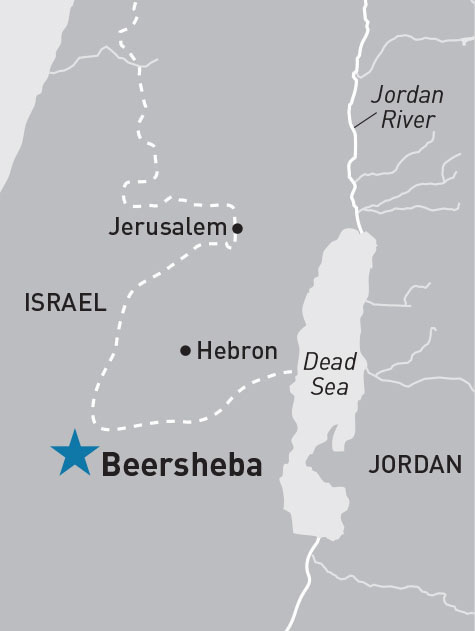
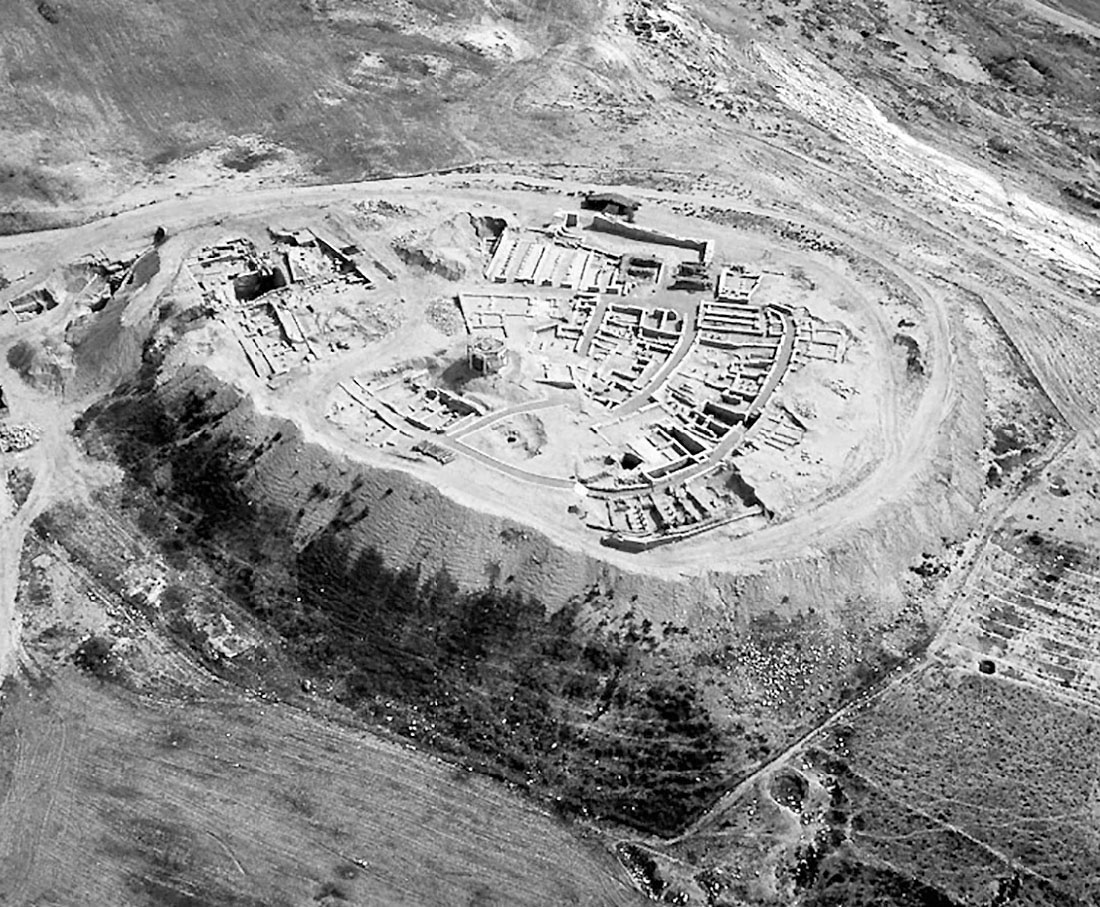
The End of the Road. Beersheba sat at the very southern tip of the populated area of Israel.

BEERSHEBA The Last Stop and a Place of Beginning

GENESIS 46:1-7

WATER REMAINED the Negev's most precious commodity. With little rainfall, the area had to rely on wells for its water. It was because of a well that Beersheba first appeared on the pages of biblical history. Abraham paid the price of seven female lambs to secure ownership of a well, and Isaac made a covenant with Abimelech at Beersheba after a quarrel over water. As a result, Beersheba takes its name from the phrases "well of the seven" and "well of the oath" (Gen. 21:25-34; Gen. 26:12-33).

Beersheba served as the last stop on the road called the "Way of the Patriarchs". This ancient highway stretched along the watershed of the hill country and received its name from the patriarchs who traveled along it. The road dead-ended at Beersheba. Because the ancient site was the last stop, it remained the proverbial southern border throughout the history of biblical Israel: "from Dan in the north to Beersheba in the south" (Judg. 20:1; 2 Sam. 24:2; 1 Kgs. 4:25). As the final stop before the wilderness, Beersheba also became a point of departure for many spiritual journeys. Abraham, Hagar, Jacob, and Elijah all experienced life-changing encounters with God in association with Beersheba (Gen. 16:8; Gen. 21:14-18; Gen. 46:3-4Gen. 46:3-4; 1 Kgs. 19:3).

As Jacob and the Hebrew people were leaving Canaan to enter Egypt at Joseph's invitation, they came to Beersheba. There God spoke to Jacob in a dream, telling him four truths (Gen. 46:3-4):

I am God.
Do not be afraid to go where I am leading you.
My purposes for you are there, not here.
I will go there with you.

In our own lives, we, too, need to hear these truths as we consider where God is leading us. By principle, they are God's promises to us as well.