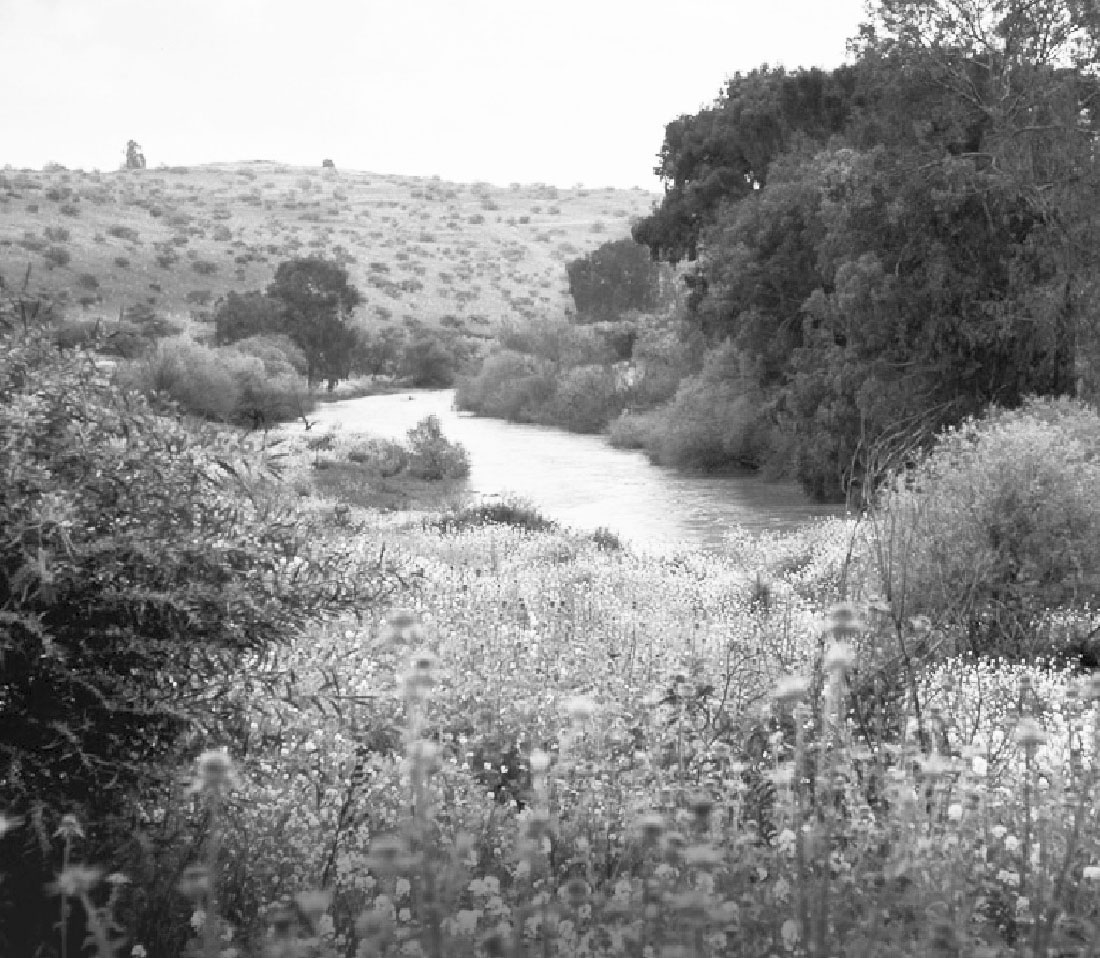
Entering the Promised Land. The people of God crossed the Jordan River to enter the Promised Land.

THE JORDAN RIVER A Place of Transition

JOSHUA 3

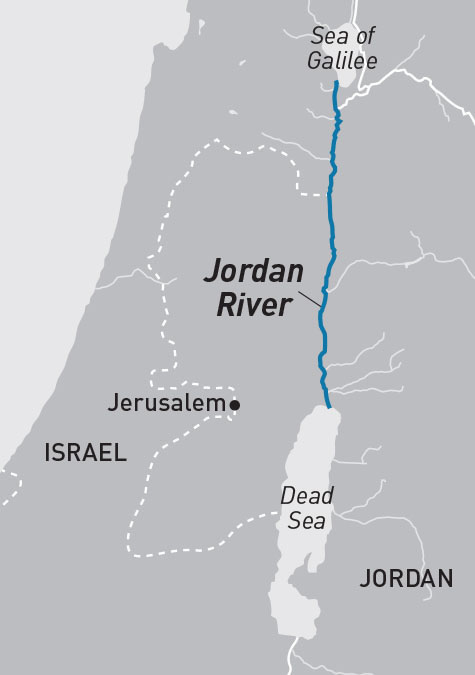
OTHER RIVERS have more beauty. Many are larger and longer. Most are cleaner. But none has garnered as much affection as the Jordan River. Its significance began as a simple geographical barrier, which practically speaking represented a border (Josh. 22:25). In fact, the serpentine river still constitutes a border between Israel and the country of Jordan. In Scripture, however, the river's presence on Israel's eastern edge represented more an enduring metaphor for transitions.

Crossing the Jordan River for Joshua meant entering the Promised Land and taking up the mantle of leadership from Moses. When the priests of God left the Jordan's eastern banks and stepped into its current, the river stopped flowing upstream at a site called Adam. After the nation crossed, Joshua made a fundamental comparison: "For the LORD your God dried up the river right before your eyes, and he kept it dry until you were all across, just as he did at the Red Sea" (Josh. 4:23). Joshua connected their powerful redemption as a nation to the same power of God that helped them enter the Promised Land.

Other significant transitions occurred in the same location on the Jordan River. Elijah transferred the prophetic mantle to Elisha just before Elijah ascended to heaven. The Jordan River parted for Elijah and Elisha, who crossed on dry ground (2 Kgs. 2:7-8). John baptized Jesus in this same location, but instead of the waters parting, the heavens did (Mark 1:9-10)!

Entering the Promised Land by fording the Jordan remains a timeless metaphor for crossing over from death to spiritual life (Heb. 4:1-10). As Joshua pointed out after crossing the Jordan, the grace of God that redeemed them was the same grace that led them home (Josh. 4:23). The same is true of us.