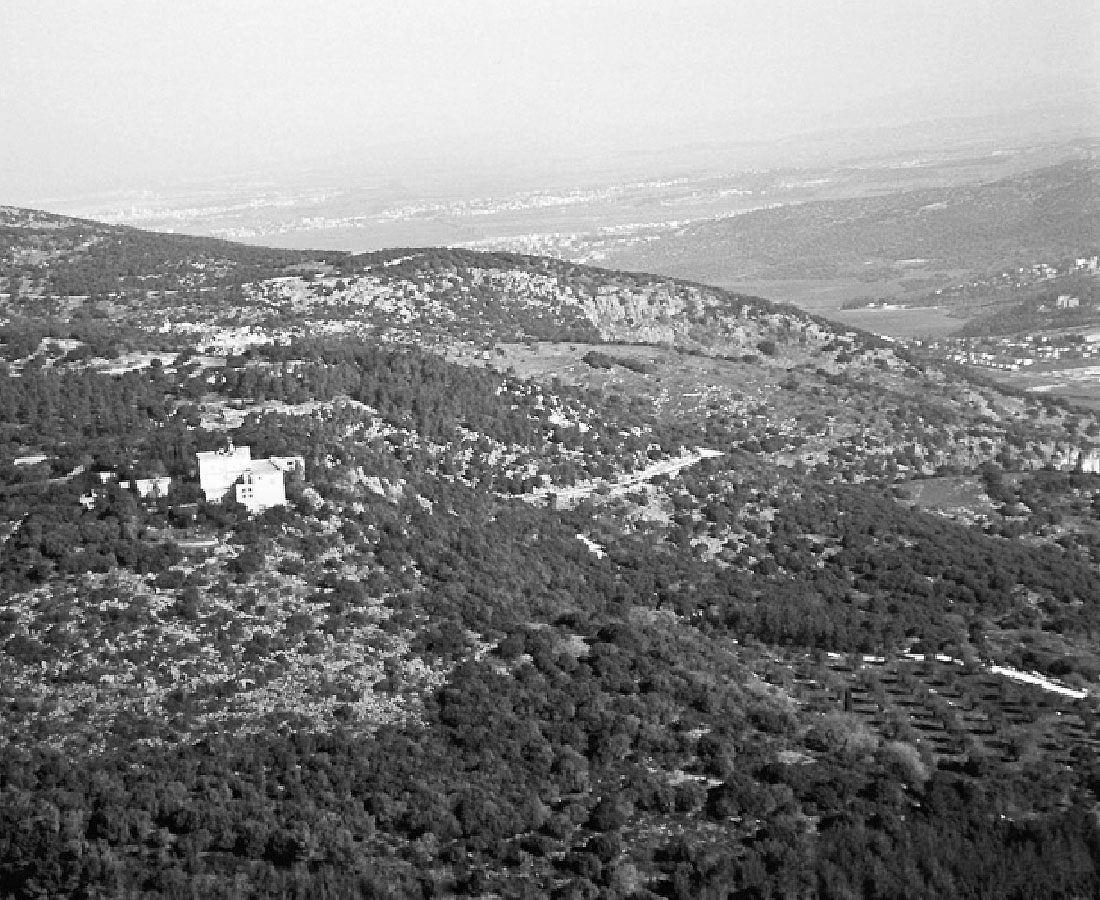
The View from Mount Carmel. A monastery rests atop Mount Carmel to commemorate Elijah's fiery showdown with the prophets of Baal.

MOUNT CARMEL Elijah's Place of Triumph

1 KINGS 18

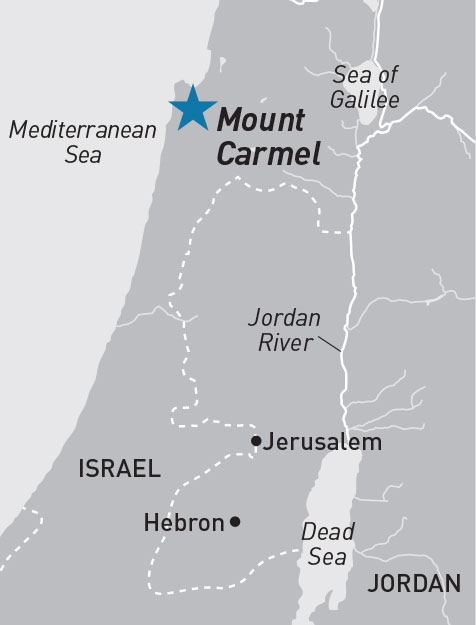
IN A LAND WHERE WATER WAS LIFE,the lush slopes of Mount Carmel came to represent nothing less than the blessing of God. The mountain range rises rapidly 1,720 feet above the Mediterranean Sea, and cool ocean breezes deposit their moisture year round in the form of abundant rains and dew. The area is associated with beauty, fertility, and majesty in the Scriptures (Song 7:5; Isa. 35:2).

Because the land had no major source of water except rain, the climate played a major role in God's relationship to His people. This land, God said, was a land "with plenty of rain" (Deut. 11:11), which could be literally translated as a land that "drinks water from the rain of heaven" (NASB). The Hebrew terms for "water" (mayim) and "heaven" (shamayim) are related, an interesting indication that God's people drew their very existence from heaven. For that reason, when Mount Carmel's verdant slopes withered from drought, it represented God's judgment against sin and rebellion (Isa. 33:9; Amos 1:2; Nah. 1:4). A lack of rain meant that God was calling His people to return to Him.

A scenic overlook tops Mount Carmel today. It is the site of a monastery called Muhraqa, which means "burning". This name refers to the famous showdown that occurred there between Elijah and the prophets of Baal (1 Kgs. 18). After three years of drought, Elijah prayed and fire fell from heaven, licking up Elijah's sacrifice including gallons of valuable, life-sustaining water! Not surprisingly, the people then turned to God. Later that same day, it rained.

The drought and the rain—both results of God's people's level of devotion to Him offer us a timeless principle of hope: God may bring discipline in our lives so that we'll repent in order that He may then bring blessing in His time.