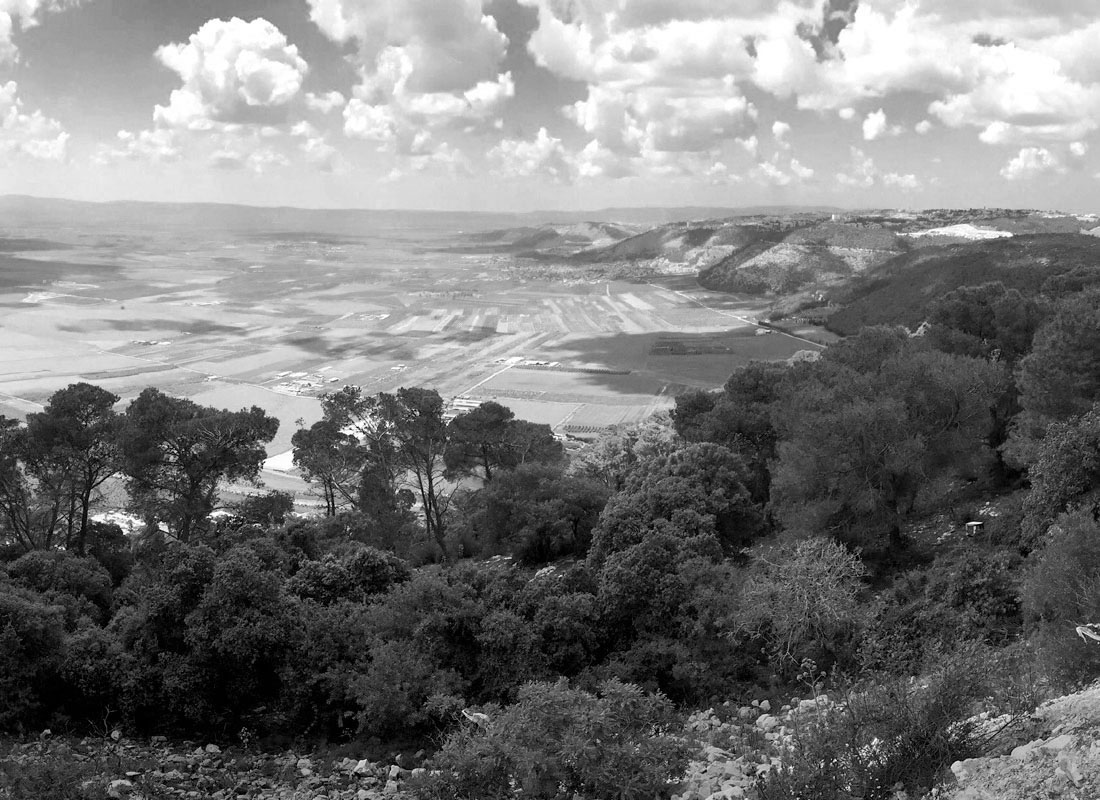
A view of the Jezreel Valley from the Nazareth Ridge

NAZARETH A Hometown with a View of the Past and Future

LUKE 4

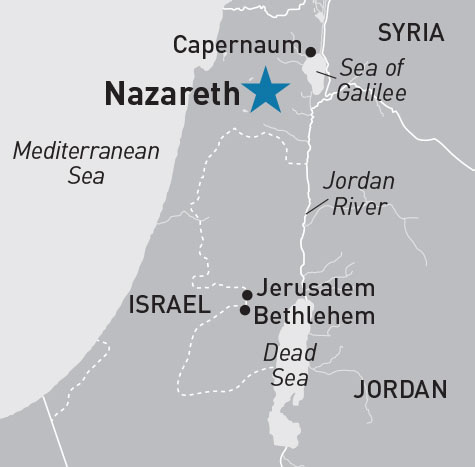
NOT MANY PEOPLE CAN SAY they grew up on a hill overlooking historic battlefields. But Jesus could. His hometown of Nazareth sat off the beaten path and high on a ridge that overlooked a major international highway and the prominent Jezreel Valley.

The Gospel of Luke tells us that Nazareth rested on a hill with a formidable precipice (Luke 4:29). The Nazareth Ridge, which outlines the town of Nazareth near what is called Mount Precipice, offers a beautiful overlook and a view for many miles in several directions. To the immediate east, Mount Tabor rises from the valley floor, where the armies of Deborah and Barak defeated Sisera (Judg. 4–5). In the distance to the south, between the hill of Moreh and Mount Gilboa, Gideon faced off against the Midianites (Judg. 6–8). On Mount Gilboa itself, the life of King Saul came to a tragic end (1 Sam. 31). Squinting southwest through the haze, Jesus could have seen Tel Megiddo, the site of many ancient battles. But the site will also serve as the place of gathering for the future battle of Armageddon (Rev. 16:16) a battle Jesus Himself will participate in.

Nazareth's name may come from the Hebrew word netzer, meaning "branch" or "shoot", or figuratively, "descendant". Some scholars believe this name represents the faith of the Jews who returned from the Exile. Their hope was focused on the coming Messiah, "a new Branch bearing fruit" from David's family, who had been promised by the prophet Isaiah (Isa. 11:1). As Jesus stood there on the ridge, possibly thinking about the words of the prophets, it's easy to imagine that He would have envisioned all the history that stretched out before Him and the future battle He will wage as the Victor.