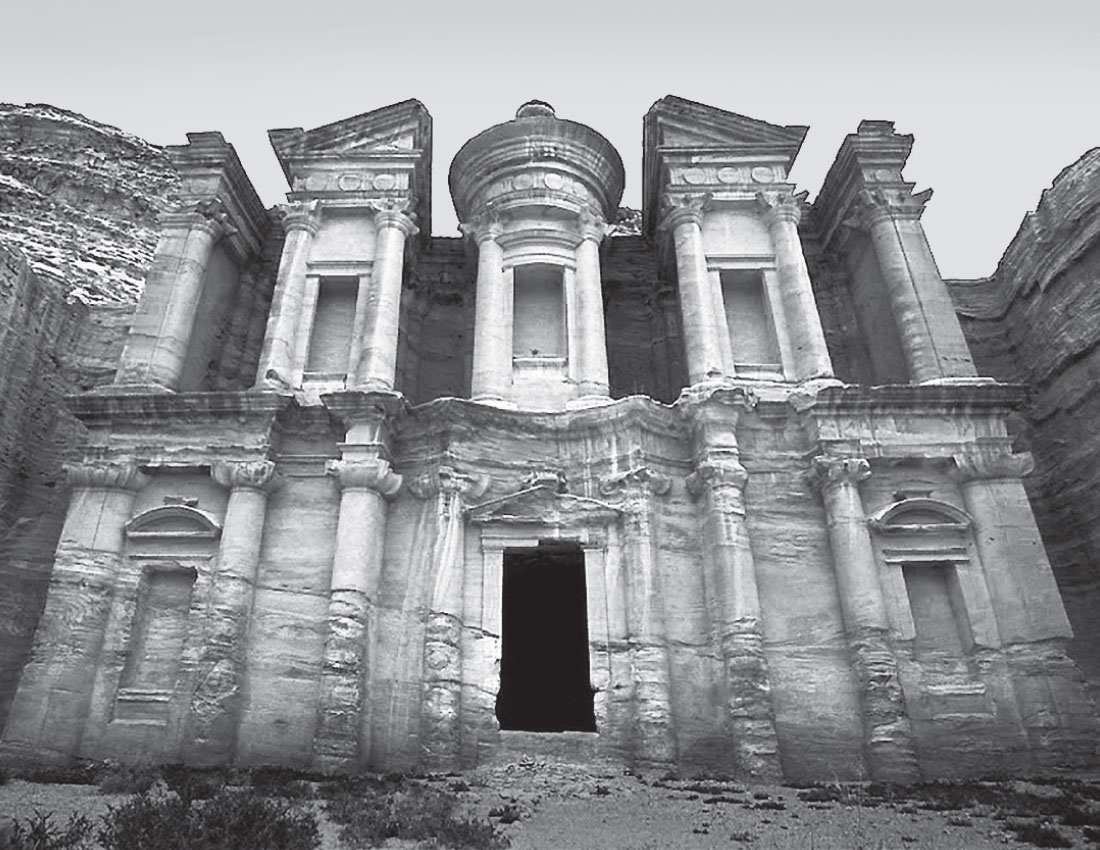
The Monastery, a funeral-monument facade, still stands at Petra.

PETRA An Example of Edom's Misplaced Pride

OBADIAH 1

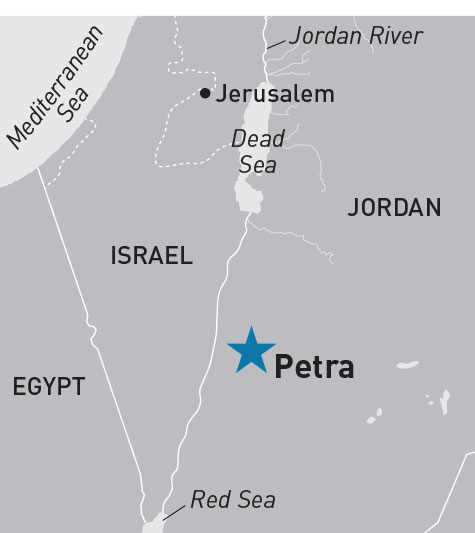
THE AMAZING ROCK CITY OF PETRA stands in the land of ancient Edom, modern-day Jordan. Because petra means "rock" in Greek (Jesus gave Peter this name in Matthew 16:18), some scholars equate it with the Old Testament site of Sela, a name with the same meaning in Hebrew (2 Kgs. 14:7; Isa. 16:1).

The ancient Nabateans, a Semitic people group, selected Petra as their capital because of its strategic location. Valleys provided tough points of entry to the city and gave the location tremendous security. The most famous entry bears the Arabic name "the Siq" meaning "the shaft". Most visitors enter the city through this narrow gorge that boasts canyon walls that feel like walking down a street lined with skyscrapers.

After the city's destruction in the fourth century AD, Petra's location remained a mystery until John Lewis Burckhardt discovered its secret location in 1812. Often called "the city of the dead", Petra is home to eight hundred tombs carved from its sandstone walls. The most well known of these is called Al Khazneh, meaning "the Treasury", because of the legend that the carved urn atop the tomb once contained hidden treasure. The ruins at Petra also include religious high places, a colonnaded street three hundred yards long, and the Monastery, a funeral-monument facade similar in scale to the Treasury.

The Nabatean city of Petra dates later than the time of Obadiah, but its geography perfectly illustrates the deceptive pride of Edom. Edom's location afforded its inhabitants an almost impenetrable stronghold. This position gave the Edomites national security, but it also led to enormous pride. Obadiah said it this way: "You have been deceived by your own pride because you live in a rock fortress and make your home high in the mountains. 'Who can ever reach us way up here?' you ask boastfully" (Obad. 1:3). The Edomites' misplaced pride would later become their undoing. The ruins of their once-glorious cities stand as a warning to anyone who nurtures a prideful, misplaced confidence apart from God. The Lord created us to live dependently on Him, not independently of Him.