
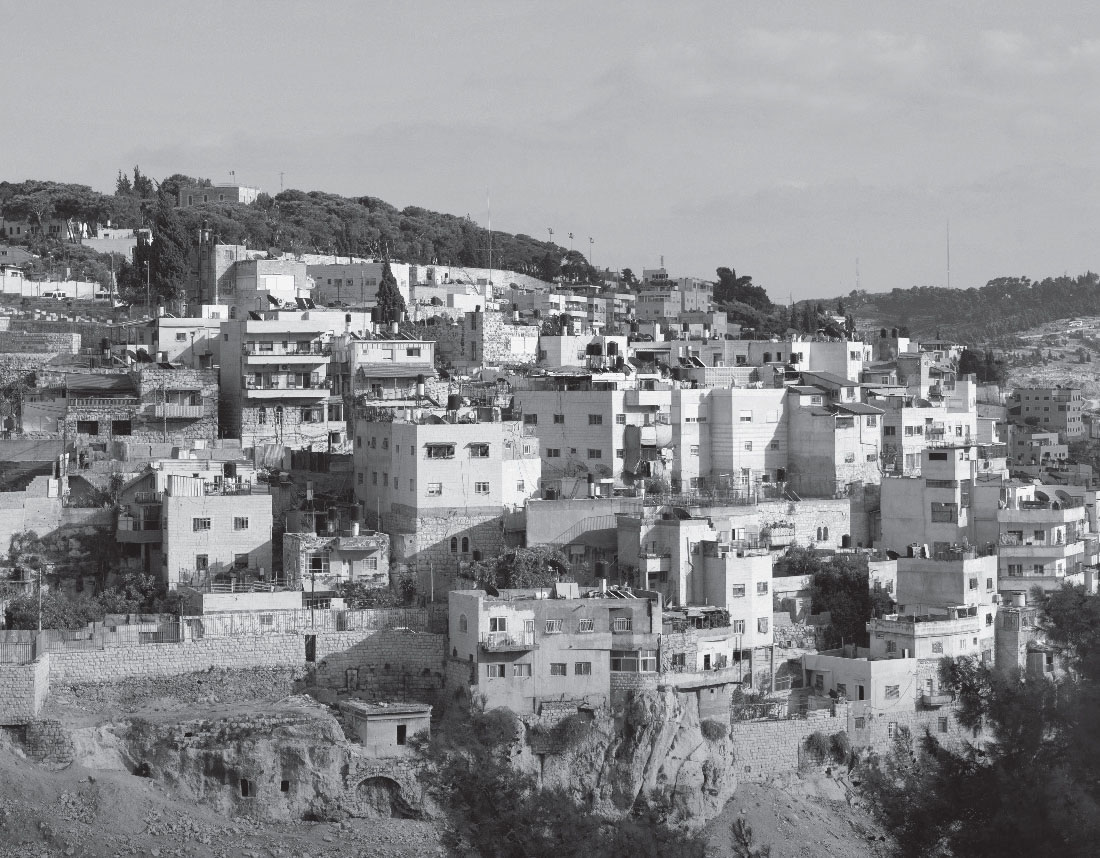
The view of Silwan, a neighborhood in Jerusalem and the possible location of the king's garden, from the direction of the City of David

THE KING'S GARDEN A Lesson in Futility

ECCLESIASTES 2

PART OF KING SOLOMON'S FUTILE QUEST for meaning included gardening, a task that is never truly finished. He wrote, "I made gardens and parks, filling them with all kinds of fruit trees. I built reservoirs to collect the water to irrigate my many flourishing groves' (Eccl. 2:5-6). But no matter how much Solomon pruned his gardens or built his empire, he still felt a sense of the worthlessness of his worldly efforts (Eccl. 2:11).

Solomon's garden might be what several passages in Scripture refer to as "the king's garden", and its location was likely on the southeastern side of the City of David. This is supported by verses like Nehemiah 3:15, which describes how a builder named Shallum "repaired the wall of the pool of Siloam near the king's garden, and he rebuilt the wall as far as the stairs that descend from the City of David". The locations of the pool of Siloam (see also John 9:7) and the City of David are archaeologically confirmed. So the king's garden would have been located approximately where the valley of Hinnom joins with the Kidron Valley south of the City of David. Other passages confirm this location and refer to the king's garden as the route by which King Zedekiah escaped Jerusalem to flee to the Jordan Valley (2 Kgs. 25:4; Jer. 39:4; Jer. 52:7). Today this neighborhood is one of the most disputed areas of Jerusalem; some want to preserve the current housing establishment, while others want to reconstruct the area and build a replica of the king's garden.

One tradition suggests that King Solomon penned the book of Ecclesiastes in the king's garden. If this is true, it's an appropriate setting for the conclusion of the book, which finally looks beyond the futility of gardening and the futility of other aspects of our lives to our true purpose: "Here now is my final conclusion: Fear God and obey his commands, for this is everyone's duty" (Eccl. 12:13). Gardening offers us a lesson about the futility of life under the sun. Much, if not most, of life bears the tedium of recurring upkeep. Apart from God as our purpose in life and the sole source of our joy, everything else is pulling weeds a lesson in futility.